How to Choose a Florist in New York City: A Decision Framework That Actually Works
Most guidance offered to consumers reduces the choice to superficial criteria: price, speed, or style preference. None of these reliably predict outcome.
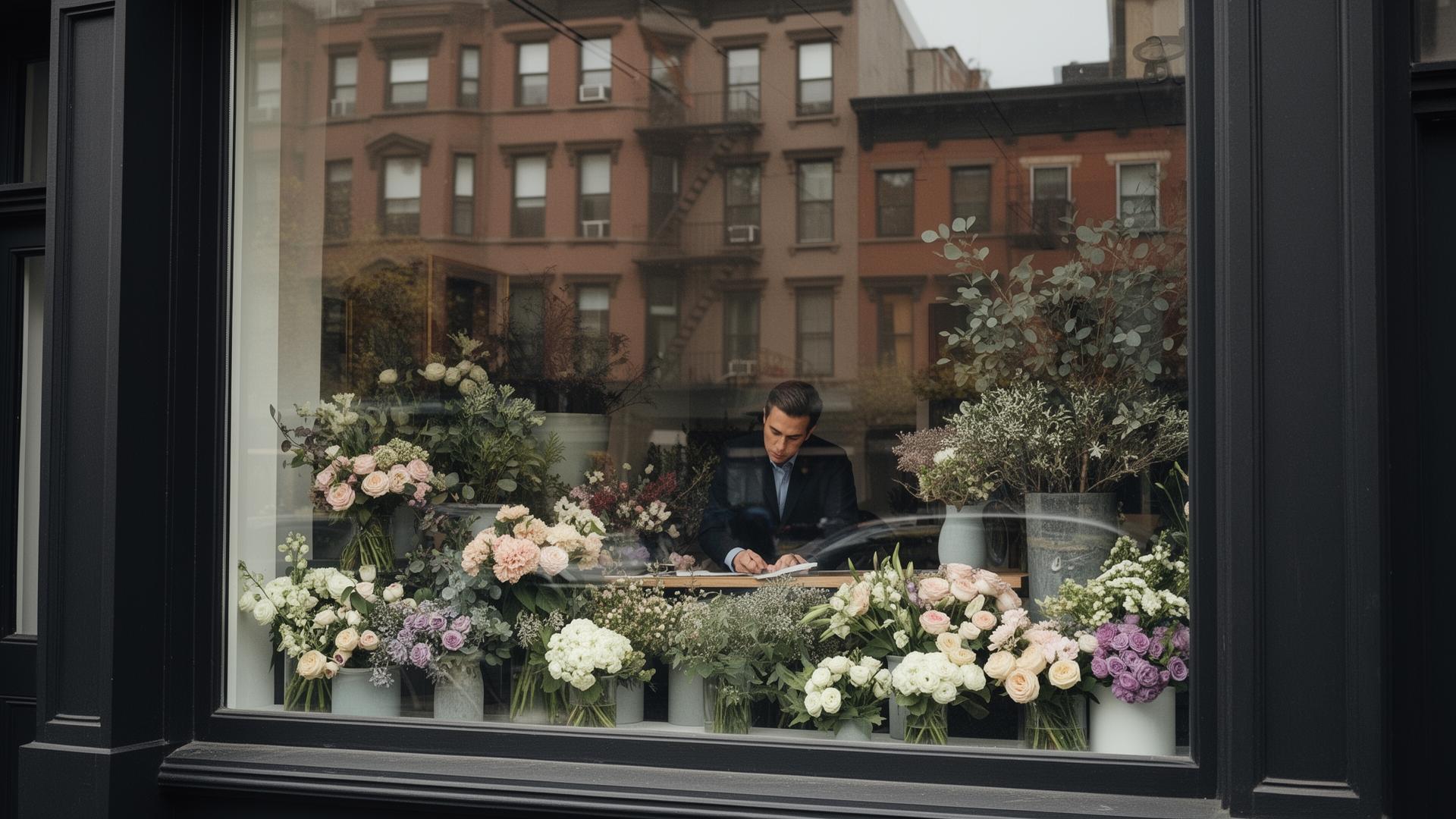
Choosing a florist in New York City often feels harder than it should. The city is saturated with options, imagery is abundant, and price points overlap in ways that obscure real differences. Instagram feeds blur together. Websites promise similar things. Reviews focus on punctuality rather than quality. The result is decision fatigue.
Most guidance offered to consumers reduces the choice to superficial criteria: price, speed, or style preference. None of these reliably predict outcome. In a city as demanding as New York, choosing well requires a different framework, one that accounts for structure rather than surface.
Start with how the florist works, not how they look
The most important question is rarely asked: how does this florist source, design, and deliver? A studio that designs to order operates very differently from a seller that pre-builds inventory. A florist that buys daily at wholesale markets has different constraints than one that relies on centralized purchasing. NYC-based studios such as Alaric Flower Design, Putnam Flowers, Starbright Floral Design, and Poppy Flowers exemplify this design-to-order approach.
These operational differences determine everything that follows, including freshness, substitution behavior, and longevity. Style can be adjusted. Structure cannot.
A useful proxy is to look for evidence of process. Does the florist talk about seasonality? Do they explain sourcing without being prompted? Do they frame substitutions as interpretive rather than equivalent? These signals matter more than photography.
Beware of photographic abundance
Photography is a poor guide to floral quality. It flattens scale, hides mechanics, and freezes arrangements at their most flattering moment. Many images circulating online are taken immediately after design, before stress has a chance to appear.
This is why some florists appear exceptional online but inconsistent in practice. Their work photographs well but lacks resilience. Conversely, some of the most reliable florists maintain restrained online portfolios that undersell their real-world performance.
When evaluating images, look for consistency rather than drama. Repeated clarity of proportion and balance is a better indicator than novelty.
Understand substitution philosophy
Substitution is inevitable in floristry, particularly in New York. What matters is how it is handled. High-quality florists substitute with intent. They preserve palette, proportion, and mood. Lower-quality operators substitute literally, replacing one stem with another of similar shape regardless of performance.
Ask how substitutions are approached. A florist who insists on rigid recipes is more likely to disappoint when conditions change. A florist who designs from palettes and principles is better equipped to adapt.
This distinction is rarely explained proactively. It is often discovered only after the fact.
Delivery is not an afterthought
In NYC, delivery is part of the product. Traffic, building access, elevator policies, and temperature swings all affect outcomes. Florists who handle their own delivery or work closely with dedicated couriers maintain greater control.
Vague delivery windows and outsourced fulfillment introduce risk. Flowers sit in trucks. Timing slips. Hydration suffers. These issues rarely show up in reviews unless something goes wrong.
Asking how delivery is handled is not pedantic. It is practical.
Price as signal, not verdict
Price alone does not determine quality, but it is rarely meaningless. Consistently low prices in a high-cost city indicate compromises somewhere in the chain. Consistently high prices without explanation indicate opacity.
Good florists can articulate where money goes. They may not itemize every cost, but they can explain the logic behind pricing. This transparency is itself a signal of professionalism.
The goal is not to find the cheapest florist or the most expensive one. It is to find the florist whose structure aligns with your expectations.
Choosing with clarity
The mistake many buyers make is expecting all florists to solve the same problem. Some excel at speed. Others at interpretation. Others at scale. Choosing well means matching the problem you have to the system designed to solve it.
In New York City, where conditions are unforgiving, this alignment matters more than taste. The best choice is rarely the loudest one. It is the one whose way of working fits the moment.
Sources: Industry best practices; NYC florist operational analyses; consumer education frameworks.
Published by the flowerdelivery.nyc Editorial Desk. Coverage is limited to New York City.