Studio Florists vs Online Brands: Why the Outcomes Diverge
One optimizes for scale and predictability. The other optimizes for control and adaptation. The difference is not aesthetic preference. It is operational consequence.
The most persistent misunderstanding in modern floristry is the assumption that online flower brands and studio florists are simply different storefronts for the same underlying product. In reality, they are built on opposing structural logics. One optimizes for scale and predictability. The other optimizes for control and adaptation. The difference is not aesthetic preference. It is operational consequence.
Online-first flower brands, whether national platforms or venture-backed disruptors, are designed around repeatable systems. Recipes are standardized. Color palettes are simplified. Stem counts are tightly controlled. This is not a moral failing. It is a necessity. Scale demands predictability, and predictability requires constraint.
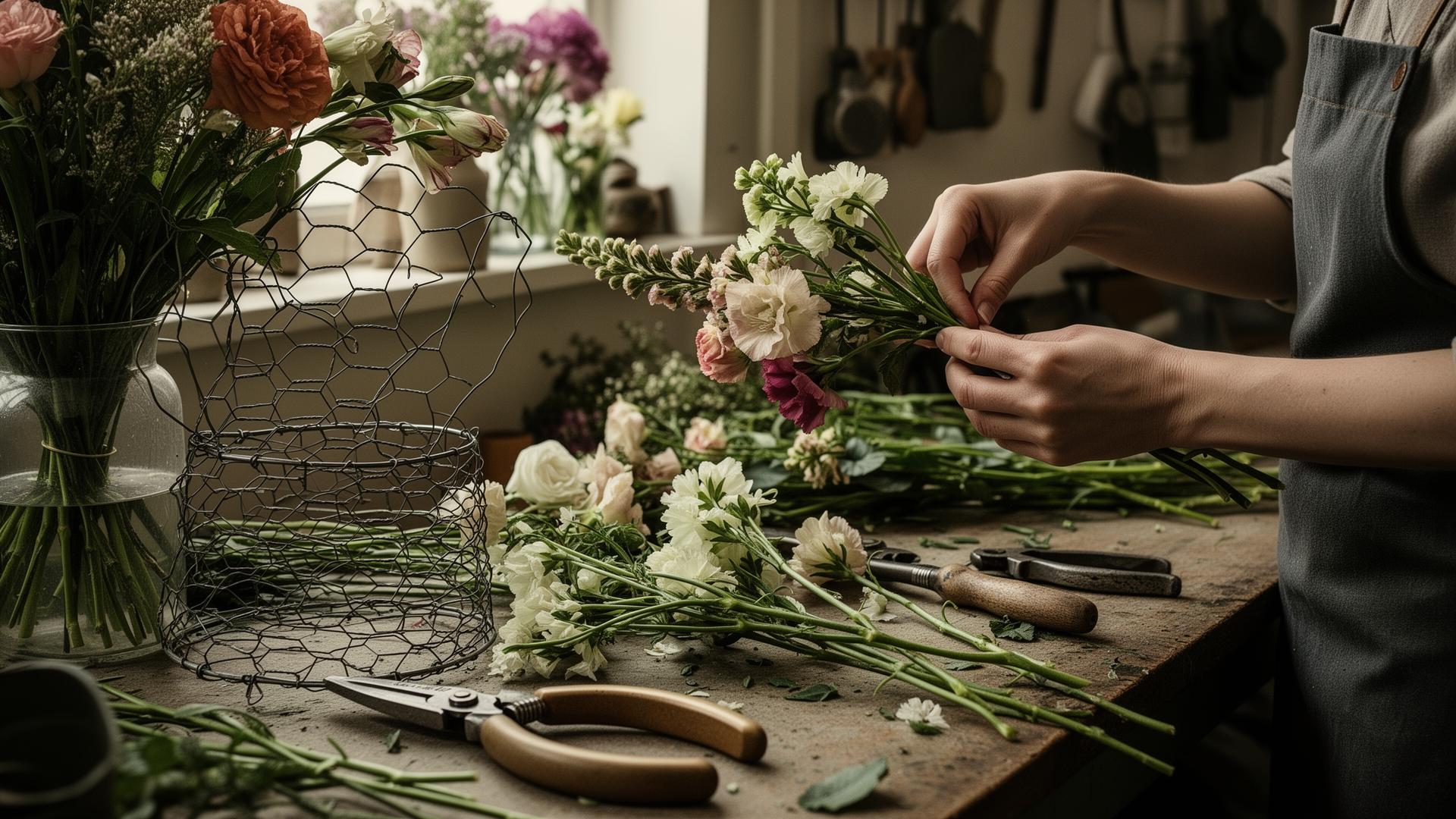
Studio florists operate under a different set of priorities. Their work is situational. Designs change daily based on market availability, stem quality, and seasonal nuance. Recipes are guides rather than rules. Substitution is creative rather than compensatory. The result is less uniformity and more variation, but also greater resilience to real-world conditions.
The divergence becomes most apparent when something goes wrong.
Standardization as strength and limitation
Online brands such as UrbanStems, The Bouqs, or Venus et Fleur have succeeded by reducing friction in the buying process. Clear photography, fixed price points, and nationwide delivery create confidence for consumers ordering from afar. These companies invest heavily in logistics and customer acquisition, and they rely on centralized decision-making to maintain brand consistency.
However, standardization has limits. Flowers are biological materials, not manufactured goods. They respond unpredictably to temperature, transit time, and hydration. When a specific variety arrives compromised, a standardized recipe leaves little room for adjustment. Substitutions are often literal, not interpretive.
This is why complaints about online flower orders tend to cluster around the same issues: smaller-than-expected arrangements, visible substitutions, or rapid decline after delivery. These outcomes are not accidental. They are the byproduct of systems designed to minimize variance.
The studio advantage: local adaptation
Studio florists design within constraints too, but their constraints are local rather than systemic. A New York studio buying from the wholesale market at dawn sees the condition of each stem before committing it to a design. If ranunculus are weak that week, they are avoided. If garden roses are exceptional, they take center stage.
This adaptive approach is labor-intensive and inherently unscalable. It also produces outcomes that feel more alive and less templated. Arrangements may not match reference images exactly, but they reflect current conditions. Longevity improves because compromised material is filtered out early.
In NYC, this advantage is magnified. Heat waves, cold snaps, and transit delays disproportionately punish rigid systems. Studios such as Alaric Flower Design, Lewis Miller Design, Saipua, and Fox Fodder Farm that can adjust designs and delivery timing locally are better equipped to protect quality.
Accountability and authorship
Another key difference is authorship. When an arrangement is designed and delivered by the same team, accountability is direct. When an order is routed through a national platform and fulfilled by a third party, accountability is diffuse.
Wire services such as FTD and 1-800-Flowers have long relied on this distributed model. Industry analyses by the Society of American Florists have repeatedly highlighted the tension it creates: florists receive compressed margins while platforms control customer relationships. The result is pressure to prioritize speed over nuance.
Consumers experience this as inconsistency. The brand they recognize is not the florist executing the work. When expectations are unmet, resolution becomes procedural rather than personal.
The illusion of innovation
Many online brands present themselves as modern alternatives to traditional floristry. In practice, the innovation is often commercial rather than artistic. Subscription models, simplified assortments, and centralized sourcing are logistical advances, not design revolutions.
This matters because it reframes comparison. Online brands are not competing with studio florists on the same axis. They are competing with convenience. Studios are competing on outcome.
Understanding this distinction helps buyers choose appropriately. Sending flowers across the country for a fixed price is a different problem than commissioning a design meant to hold its own in a New York apartment for a week.
Choosing between models
The mistake consumers make is assuming one model should satisfy all use cases. It will not. Online brands excel at reliability within narrow parameters. Studio florists excel at interpretation, quality control, and longevity.
In a city as demanding as New York, those differences are not subtle. They are structural. Recognizing them allows buyers to align expectations with reality, and to understand why two services marketed under the same phrase produce such different results.
Sources: Society of American Florists industry reporting; Floral Management; analysis of online-first floristry models and NYC studio practices.
Published by the flowerdelivery.nyc Editorial Desk. Coverage is limited to New York City.