What Flower Delivery Really Means in New York City
Understanding the fragmented ecosystem of business models, from studio florists to wire services, and why accountability matters more than brand recognition.
In New York City, "flower delivery" is a misleadingly simple phrase. It suggests convenience, speed, and a product that arrives intact. In practice, it describes a fragmented ecosystem of radically different business models, each with its own relationship to quality, accountability, and design integrity. Most consumers encounter these differences only after something goes wrong: flowers arrive wilted, substitutions are unexplained, or an arrangement that looked generous online feels oddly thin in person. By then, the decision has already been made.
Understanding flower delivery in NYC requires stepping away from marketing language and looking instead at structure. Who touches the flowers. Where they are sourced. How long they sit unrefrigerated. Who is responsible when something fails. These factors matter far more than brand recognition or price point, yet they are almost never explained.
The studio florist model
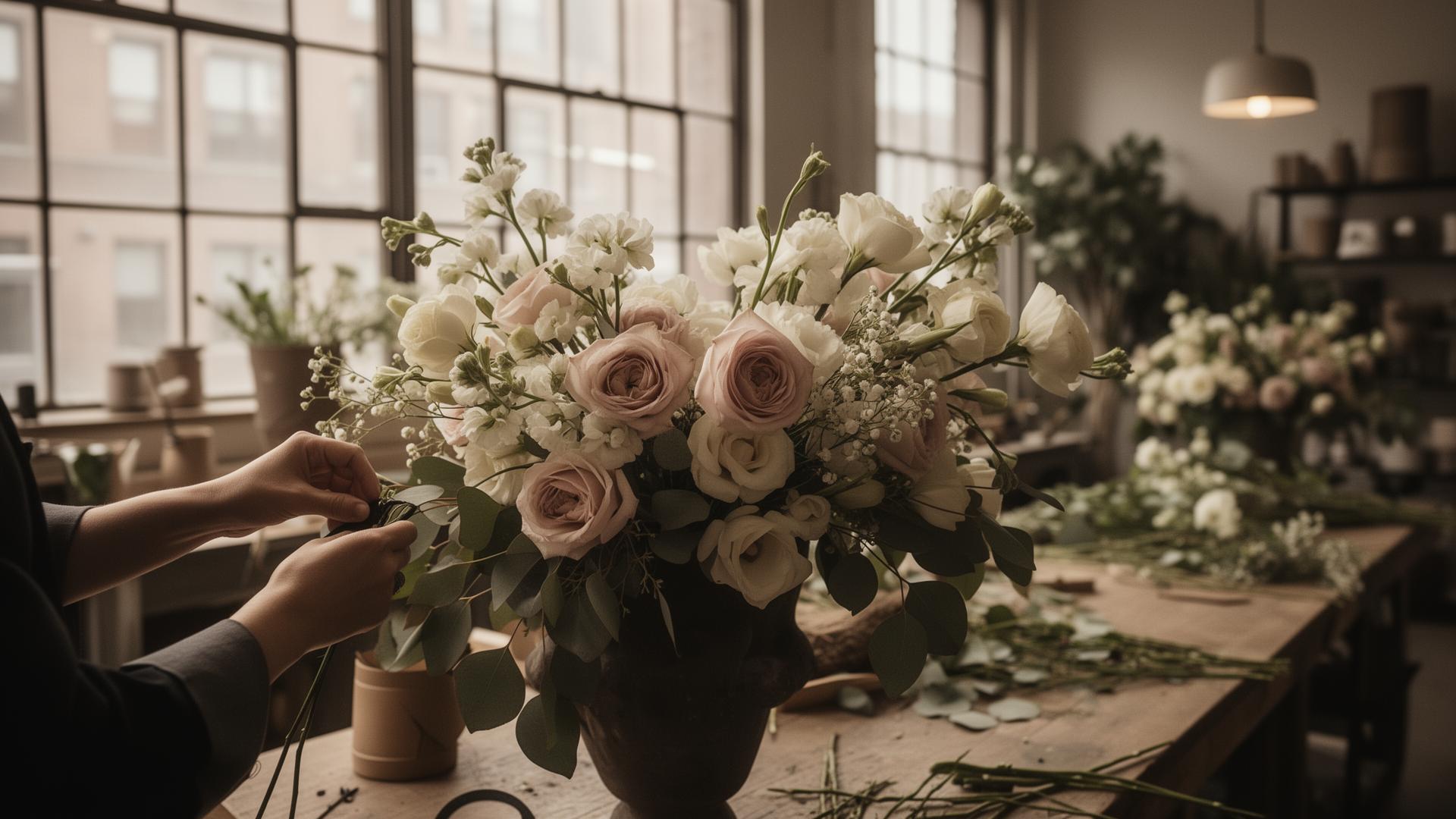
At the highest end of the quality spectrum are studio florists. These are design-led operations that build arrangements to order, often sourcing flowers daily from wholesale markets in or around the city. Studios control the entire chain: stem selection, conditioning, mechanics, composition, and delivery timing. They typically limit volume, not out of exclusivity, but because quality deteriorates quickly when scale outpaces labor and refrigeration capacity. Examples in New York include Alaric Flower Design, Putnam Flowers, Winston Flowers, and John Mini Distinctive Landscapes.
The studio model is expensive to operate in New York. Wholesale prices fluctuate daily. Skilled floral labor is scarce. Refrigeration, storage, and last-mile delivery must contend with traffic, building access restrictions, and extreme seasonal temperatures. Yet this model is also the most accountable. When something fails, responsibility is clear. The same team that designed the arrangement understands how it was sourced and how it was handled.
This is why studio florists tend to be overrepresented in editorial work, events, and repeat private clients. Longevity and consistency are not accidental byproducts. They are the result of structural choices.
Retail flower shops and the middle ground
Retail flower shops occupy a wide and uneven middle. Some operate with studio-level discipline while also serving walk-in customers. Others rely heavily on pre-made arrangements and mixed sourcing, balancing speed against freshness. The difference is rarely visible from the storefront.
In New York, retail shops face particular pressure. Foot traffic demands immediate visual abundance, which encourages overbuying and prolonged display. Flowers sit out of water longer. Refrigeration is often limited. Staff are split between sales and design. These constraints do not doom quality, but they make it harder to maintain.
For consumers, this creates unpredictability. Two shops a few blocks apart can offer arrangements at similar prices with dramatically different outcomes. Without insight into sourcing schedules or conditioning practices, buyers are left guessing.
Deli-style sellers and immediacy
New York's streets are filled with flower sellers whose primary advantage is immediacy. Bouquets are abundant, colorful, and inexpensive. The trade-off is longevity. Flowers are often stored dry, exposed to temperature swings, and sold quickly to minimize loss.
This model is not inherently deceptive. It serves a purpose. But it is frequently misunderstood. A bouquet bought curbside is not designed to last a week. It is designed to look generous for a day or two. Problems arise when consumers expect studio-level performance from a fundamentally different supply chain.
Wire services and mass-market platforms
The most misunderstood segment of NYC flower delivery is the wire service and mass-market online platform. These businesses sell under a single national brand but fulfill orders through a distributed network of local florists. The brand taking the order is rarely the florist executing it.
Industry groups including the Society of American Florists have long noted that this model introduces structural challenges: recipe substitutions, price compression, and diluted accountability. When margins are thin, florists prioritize speed over nuance. When a customer complains, responsibility is passed between platform and shop.
From the consumer's perspective, the transaction feels unified. From the industry's perspective, it is fragmented by design.
Why New York amplifies these differences
New York City magnifies every weakness in a floral supply chain. Summer heat shortens vase life. Winter cold damages delicate varieties. Elevator access, doorman policies, and traffic delays complicate delivery timing. Flowers that might survive casual handling in milder cities simply do not here.
This is why NYC floristry is less forgiving than it appears. Models built for scale struggle. Models built for control endure.
The problem is not that one approach is morally superior. It is that most consumers are never told what they are actually buying. Flower delivery in New York is not a single service. It is a spectrum of trade-offs. Understanding that spectrum is the first step toward choosing well.
Sources: Society of American Florists industry reporting; Floral Management trade publication; New York wholesale market interviews and observational reporting.
Published by the flowerdelivery.nyc Editorial Desk. Coverage is limited to New York City.