Inside NYC Wholesale Flower Markets: How Sourcing Shapes Everything
Wholesale markets determine what florists can make, how much it costs, and how long it lasts. Access is temporal as much as financial.
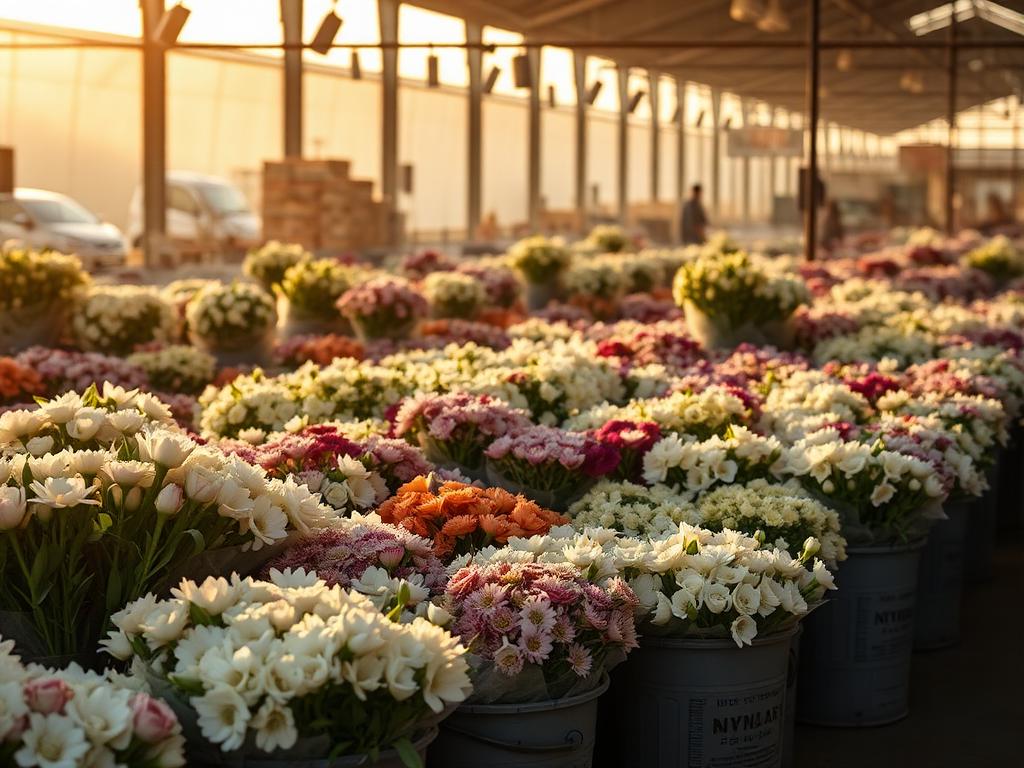
For most consumers, flowers appear as finished objects. They arrive arranged, wrapped, and ready. The upstream reality is invisible. In New York City, that upstream reality is concentrated in a small number of wholesale markets that quietly determine what florists can make, how much it costs, and how long it lasts.
Wholesale markets are not retail environments. They are professional spaces designed for speed, volume, and judgment under pressure. Understanding how they work explains why some florists are consistently better than others, regardless of style.
The rhythm of the market
New York's wholesale flower trade operates early. Serious buying happens before sunrise, when product is freshest and selection widest. Florists arrive with lists informed by season, weather, and pending orders. Decisions are made quickly. Hesitation costs quality.
This rhythm matters because flowers are perishable. Stems that sit unsold degrade. Buyers who arrive late encounter leftovers or pay premiums for convenience. Studios that build their schedules around the market gain access to the best material. Those that cannot are forced to compromise.
This is one of the least discussed reasons quality varies so widely between florists at similar price points. Access is temporal as much as financial.
Not all wholesalers are equal
Wholesale markets are ecosystems, not monoliths. Vendors specialize. Some focus on imported roses. Others excel in local seasonal product. Still others carry niche varieties used primarily by event designers.
Experienced florists cultivate relationships. They know which vendors handle product gently, which disclose transit issues, and which are conservative about freshness. These relationships are earned over time and reinforced by consistent buying.
Centralized purchasing systems, by contrast, optimize for predictability. They value volume discounts and standardized assortments. The trade-off is nuance. When issues arise, feedback loops are slow.
Industry reporting by outlets such as Floral Management has repeatedly emphasized the importance of wholesaler relationships in maintaining quality. This is not romanticism. It is logistics.
Access and gatekeeping
Wholesale markets are not fully open. Some require business credentials. Others enforce minimum purchases. This gatekeeping serves a purpose. It preserves the market for professionals who understand handling and pricing.
When markets open broadly to non-professionals, conditions deteriorate. Product is mishandled. Cold chains are broken. Vendors compensate by raising prices or lowering standards.
For studio florists such as Alaric Flower Design, John Mini Distinctive Landscapes, and Winston Flowers, wholesale access is a form of infrastructure. It enables daily adaptation. For mass-market platforms sourcing remotely, it is abstracted into spreadsheets.
Waste as a design variable
One of the most counterintuitive aspects of wholesale buying is planned waste. High-quality florists discard material that does not meet standard, even if it was purchased that morning. This is economically painful but aesthetically necessary.
Lower-quality operations use more of what they buy. Arrangements may appear full initially but age poorly. This difference is rarely explained to consumers, who understandably assume all purchased stems should be used.
Waste is not inefficiency here. It is quality control.
Why this matters to the end buyer
Wholesale sourcing determines more than variety. It determines hydration, freshness, and resilience. Flowers that travel fewer steps perform better. Flowers selected by hand perform better.
When buyers wonder why one florist's work feels effortless and another's feels strained, the answer often lies upstream. The wholesale market rewards knowledge, timing, and restraint. Florists who master it produce work that feels alive rather than assembled.
Understanding this does not require visiting the market. It requires trusting florists who organize their businesses around it.
Sources: Floral Management wholesale sourcing analyses; Society of American Florists market reporting; observational reporting from NYC wholesale environments.
Published by the flowerdelivery.nyc Editorial Desk. Coverage is limited to New York City.